About The Project

Deserts offer unique insights into modern regimes of mobilities, ecologies, and bordering practices. But desert spaces have often been overlooked and marginalised by presumptions of their unproductiveness, inhospitality and homogeneity. Our project aims to introduce a comparative, global perspective on deserts as spaces of perceived ‘disorder’.

Led from the Humanities in collaboration with the Social Sciences, the researchers involved in this project are using literary, historical and ethnographic methodologies to explore and explain the imperial and postcolonial anxieties that deserts, and their inhabitants, provoked. Our project re-orients deserts from the margins, placing them at the centre of an interrogation of modern/colonial and postcolonial authority and placemaking. Re-centring deserts in this way, we aim to recover alternative, possibly resistive, forms of sovereignty that were established among desert populations, and through desert environments and cultures, which existed beyond the conditions of normative state and citizenship regimes. 

Desert Disorders is an inter-disciplinary and comparative project, focusing on the Thar desert region in India, and the arid regions within and surrounding Somaliland. Our research team currently includes scholars from literature, history, sociology and social anthropology.  The project is funded by the British Academy.

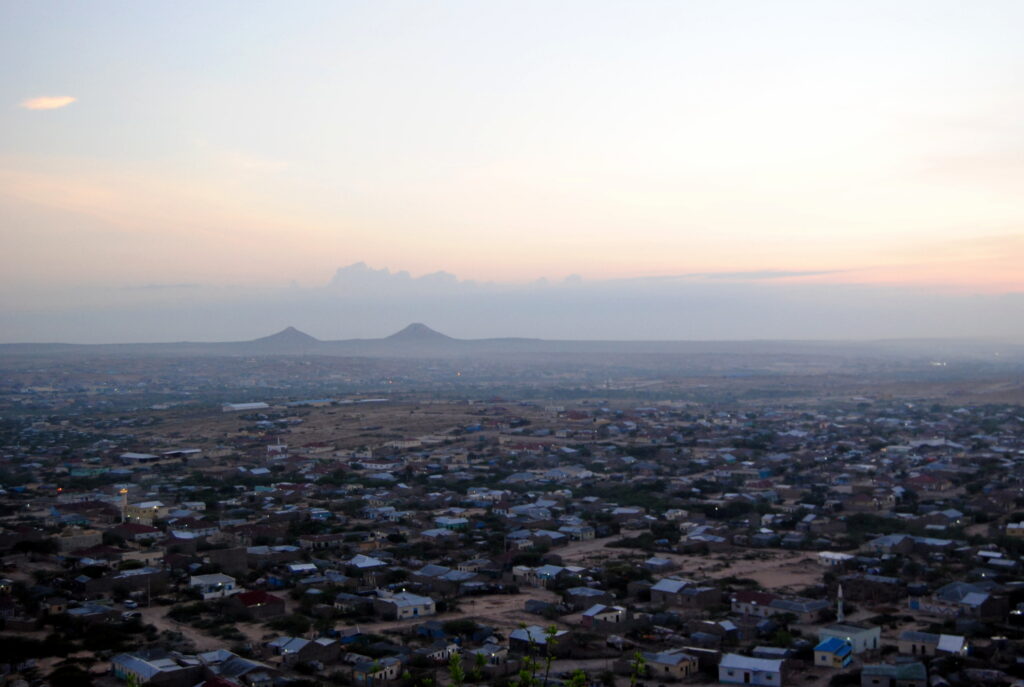
a skyline of a city at dawn, with two mountains visible in the distance

Why Desert (Dis)orders?

Deserts present affordances and challenges to modern forms of governance over space, populations, production and trade that are dependant on an understanding of desert regions as marginal, extreme and frontier, whether within or beyond the colony/nation. On the one hand, deserts create natural boundaries through their apparently inhospitable, sparsely populated and unproductive landscapes. Deserts are frequently held to exist apart from, and in distinction to, normative territories and populations. On the other hand, desert topographies resist the establishment of borders, whether cartographically or in situ, creating a porosity that defies the idea of a line in the sand. Deserts have been places in which colonial models of governance and law were challenged and compromised. Existing desert research, however, tends to reiterate the marginalisation of desert regions, regarding deserts as a geographic and topographic category. In travel and ethnographic narratives, deserts raced to provide backdrops. Desert societies are frequently understood as marginal and exceptional to a dominant socio-economic and political order.

Project Aims

Desert Disorders seeks to challenge narratives of deserts as ‘disordered’. Our project is examining how deserts ordered and disordered colonial ideas about place, climate and people, the relationship of those ideas to ‘indigenous’ conceptualisations of the same regions, and the implications of these ideas in postcolonial desert spaces. Through this project, we are using deserts to re-think the assumed order of the territorially bounded state and the inheritance of this ordering and disordering in postcolonial contexts. 


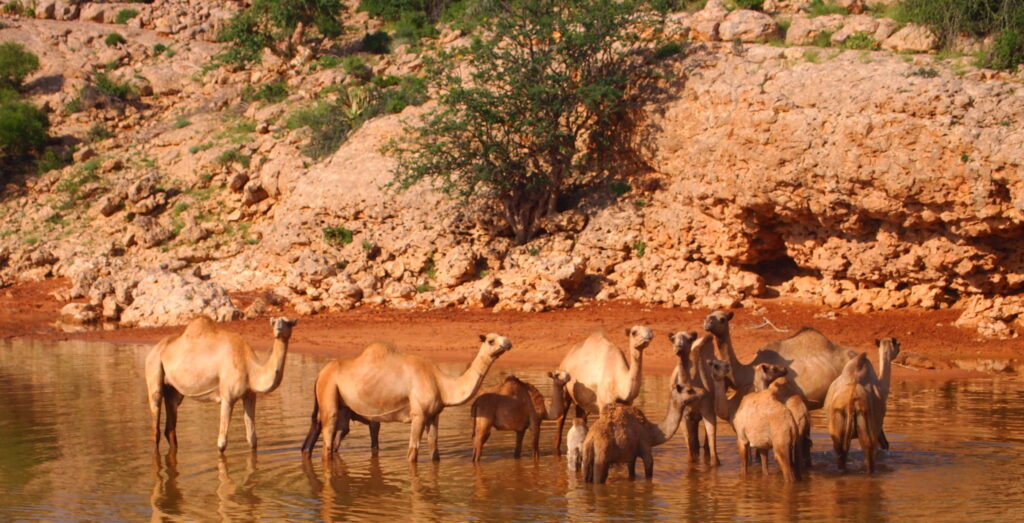
a small herd of camels stand in shallow water

Core Project Themes

Mobilities

Under colonial rule, both case study desert regions were understood as spaces of ‘disorderly’ mobilities. The challenge that non-sedentary populations posed and pose to the imperial and national state has been established in extensive research. Mobile populations are less visible to the state, are frequently associated with instability, if not criminality, marginal production and environmental damage.

We are investigating the disordering of the bordered state by mobility through attention to the following key examples: networks of clan, marriage and intimacy across desert borders; transnational trade networks; religious pilgrimage; and tourism.
Ecologies

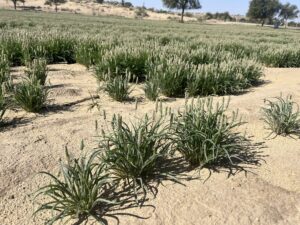
Our Ecologies theme compares and contrasts colonial approaches to the two case study regions, tracing connections and derivations in geographical and climatological understandings of each. Our research is exploring the construction of deserts as ‘extreme’ ecologies, places of wilderness, and environments which were subject to repeated attempts to modify or rehabilitate them as productive landscapes.

Borders

This theme critically interrogates the ambiguity presented by deserts as border regions. Deserts provide a unique vantage point from which to think about sovereignty outside the normative territorialized view of the nation-state. In response to ideas that distinguish between sovereignties of the core vs those that are peripheral and ambiguous , our research in this area is unpacking the multiple forms of sovereignty that convert frontiers and borderlands into zones of creative possibility.
Ongoing Research

Thar Desert, India

Our India-focused researchers are currently carrying out several inter-linked research projects. 

Saline Landscapes and Techno-Futures of the Desert

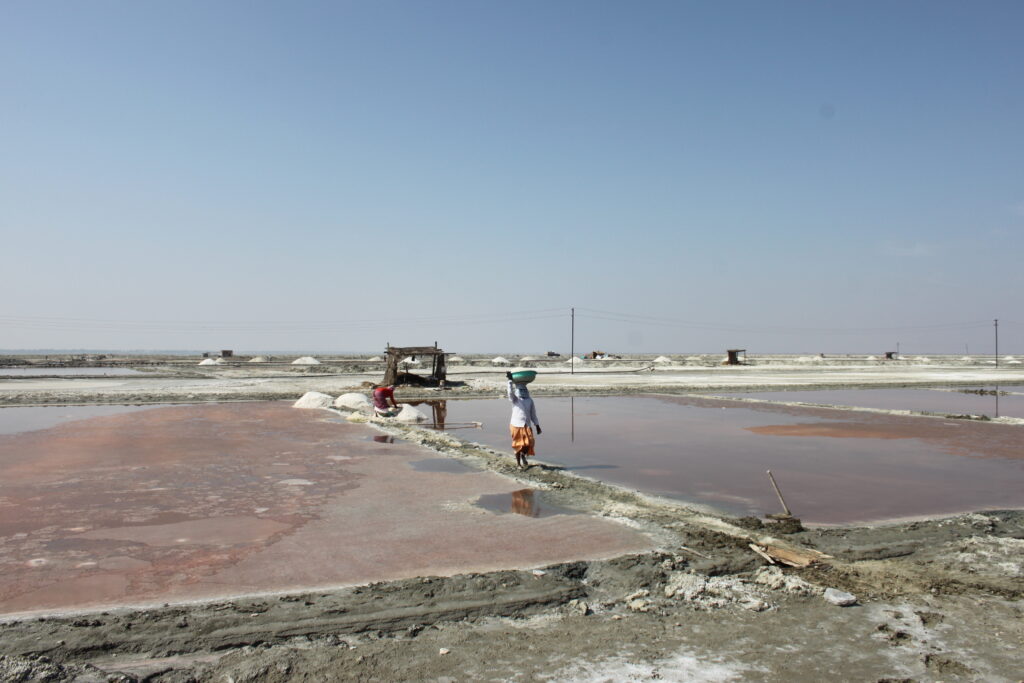
Deborah Sutton’s work on the project is concerned with the environmental imaginaries of arid environments in Rajasthan. She has been exploring the history of Sambhar salt lake, from the 1880s to the present, and saline landscapes. She is also interested in the history of desalination technologies in India, and Rajasthan in particular, and the techno-futures imagined from the 1950s onwards in and about the desert. 

Citizenship and Religiosity Across Borders

Farhana Ibrahim, supported by Bharat Hun, Neha Meena and Aamir Raza, is exploring aspects of citizenship and religiosity through cross-border migration across western India (Gujarat and Rajasthan) and Pakistan through patterns of marriage, pilgrimage, and other forms of cultural exchange.

a person carrying a vessel on their head walks along a small embankment separating two shallow pools where salt is being mined
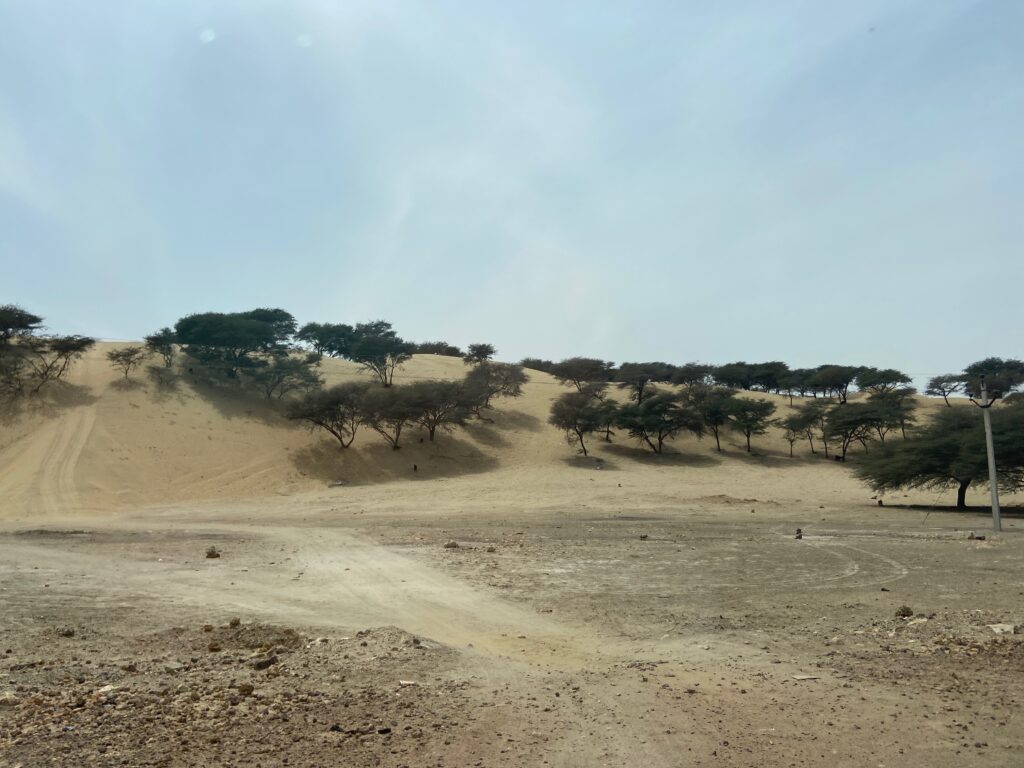
a sandy landscape featuring a small rise with short trees trowing
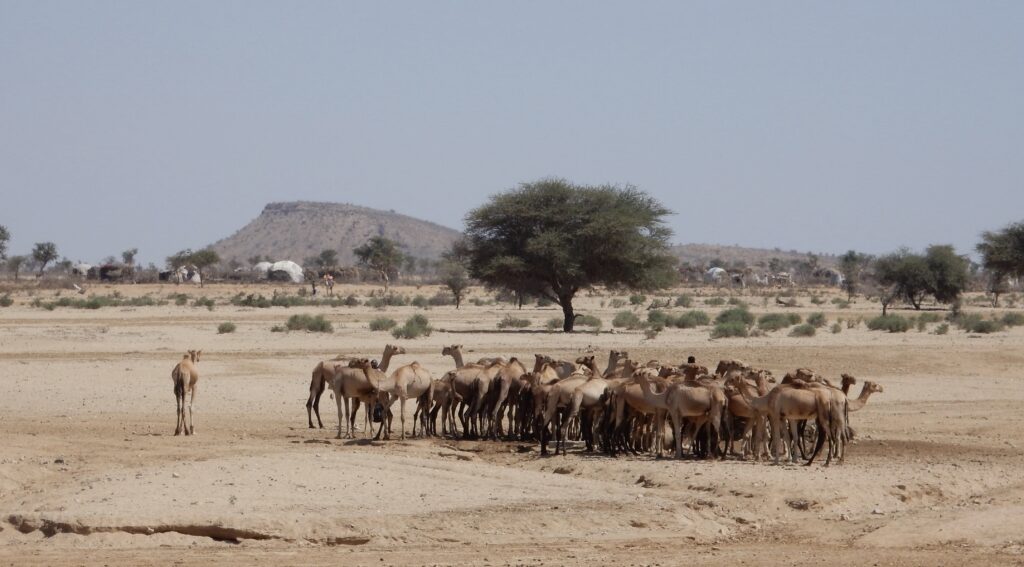
a herd of camels stands in the foreground of a sandy landscape. In the background are a small group of huts, a tree, and a small mountain.
reel-to-reel cassettes lined up on a shelf, featuring one labelled 'Magool'

Somaliland and its Diaspora

Our Somali-focused researchers are carrying out research that explores both colonial and contemporary notions of the ‘desert’ in Somaliland and the Somali diaspora.

Animal Mobilities and Political Borders

Katherine Baxter has been exploring how livestock and wildlife management, and other animal mobilities, shaped colonial border policies and practices. Drawing on official and private papers, fiction, memoir and poetry, she has been tracing the critical role of animal movement to how borders were experienced in colonial Somaliland. She has also been exploring how this phenomenon filtered into postcolonial imaginaries of the Somali state. 

Sounding the Desert in Somali Diaspora Poetry

Poetry has long been central to Somali sociopolitical life, and the pastoral imagery and imaginaries that feature prominently in this verse provide a powerful indigenous counterpoint to colonial narratives of Somaliland’s ‘desert’ landscapes. Christina Woolner is currently investigating the extent to which these imaginaries feature in the poetry of Somali diaspora artists, who are separated geographically and temporally (and sometimes linguistically) from these landscapes. She is especially interested in how the ‘desert’ is evoked in word and sound, and how ideas of ‘home’ and artistic expression are being refigured amongst diaspora poets. 

Scroll to Top