Dr Alex Jackson on Football, Ephemera and the First World War

Alex Jackson sitting at a wooden table next to a stack of copies of his book and smiling at the camera, holding a copy of his book.
The author posing with his magnum opus

Dr Alexander Jackson has been a curator at the National Football Museum since 2011. For the last eight years, he has been researching and writing, Football’s Great War: Association Football on the English Home Front, 1914-1918, out now with Pen & Sword. He has written on various aspects of football history and has a particular interest in football in the first half of the twentieth century.

Alex has kindly provided us with some reflections on the role of ephemera in his research. If you enjoy this post, you can find the book at this link  and Alex is on Twitter at @DrAlexJack1
Why have you written a book about Association Football on the Home Front during the First World War?

It started when I worked on the museum’s 2014 exhibition on this topic. It was wonderful chance to spend time with the collections, especially as we started to find more and more relevant material. During the research, I found that there was more about football at the front, whereas, outside of women’s football, the home-front tended to be underexplored. After the exhibition finished, I thought I’d continue exploring it in my spare time. I quickly found lots of amazing material and decided to keep going. It’s taken a while, but it’s been worth it!

I think the story of wartime football on the Home Front is important for three reasons. Firstly, most histories of the Home Front tend to pass over the 1915-1918 period, which gives the impression that football shutdown, but that’s not the case. So, it’s something of a hidden history. Secondly, it connects with the wider experience of war in all sorts of ways, from military recruitment to charity work, to the changing place of women in society. And finally, it’s an important period in the game’s history, when the payment of players was temporarily banned – a pause if you will, in the growing commercialisation of the game that started in the 1880s and that continues to define the game today.

What role did ephemera play in researching the book?

Ephemera was vitally important to the research. While I used traditional archival resources, like the Minute Books of football organisations and clubs, I used a variety of other sources like letters, newspapers, programmes, boys’ story papers, collectables, postcards, illustrations, and cartoons. These were vital to finding the human detail and voices that hopefully bring some life to the book.

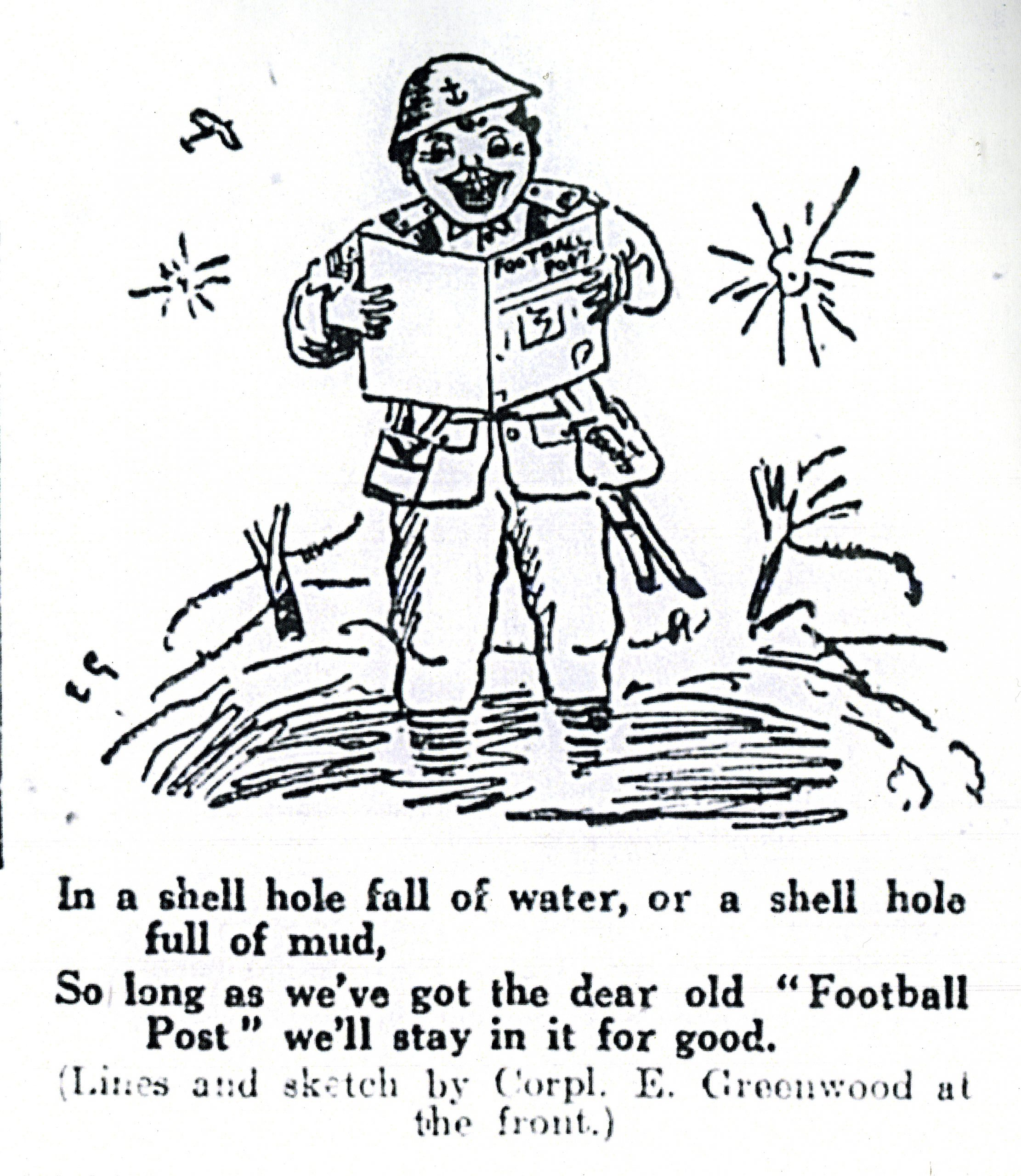
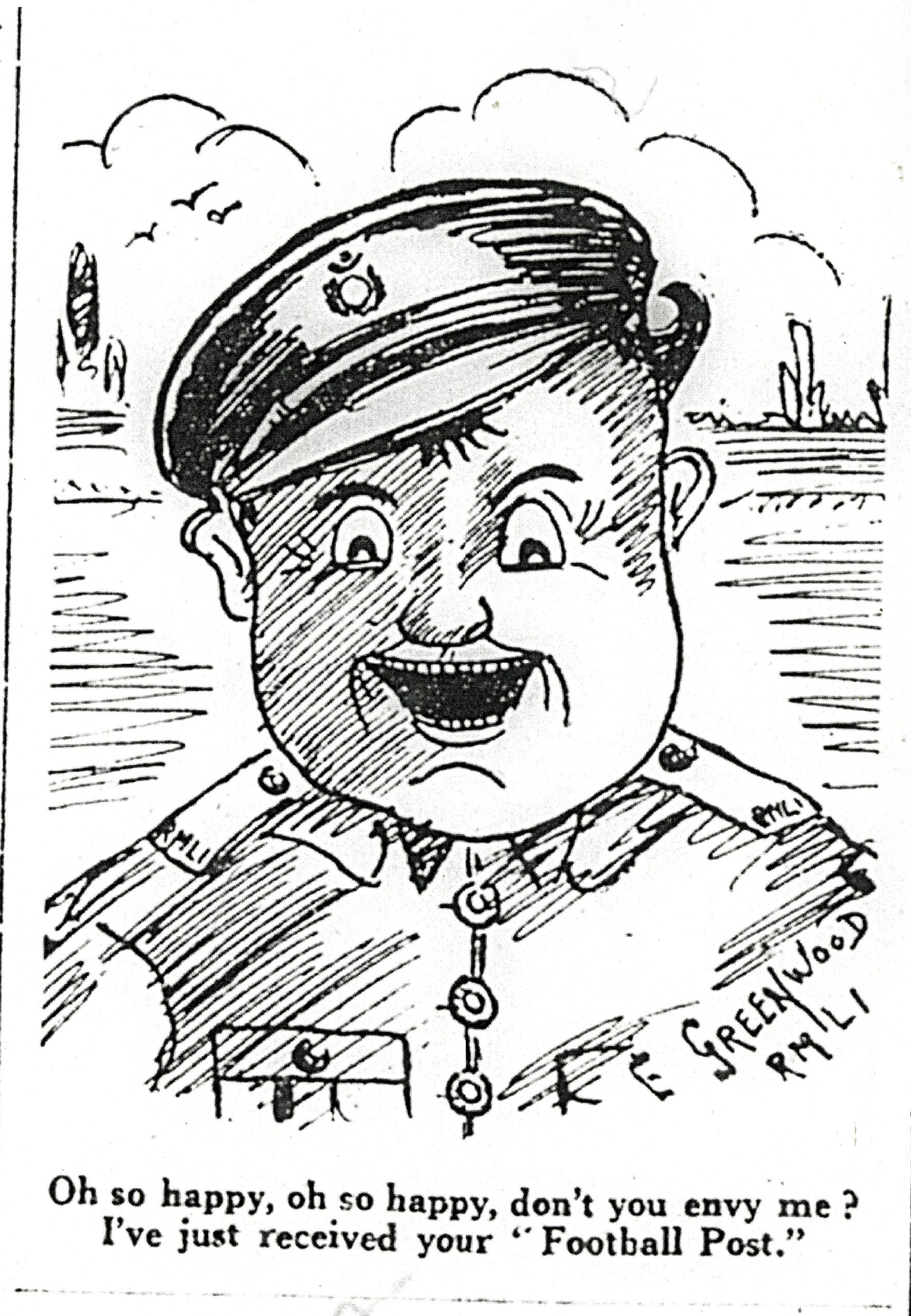
One of the most important types has been the Saturday evening football or sports special. These newspapers were the most important commercial by-products of the rise of professional football, described by Tony Mason as ‘much part of the cultural scene as the gas lamp and the fish and chip shop.’ They are rich, nuanced, and complex sources, still awaiting a specialist history of their own. For the book, they emerged as an important compendium of all sorts of other ephemera – letters, photographs, cartoons, sketches, and illustrations. In many cases, the originals have long since disappeared, so it’s only by carefully searching through these papers that we can start to explore the experiences of many ordinary fans and players. By way of example, the image you can see below is a self-portrait that a Nottingham soldier sent to the Nottingham Football Post. He was a frequent correspondent, and the newspaper printed a variety of letters, poems, cartoons, and photographs that he sent in. It’s a tiny treasure-trove of one man’s wartime experience and how illustrates how the home and front lines connected.

Where did you find or look at these types of ephemera?

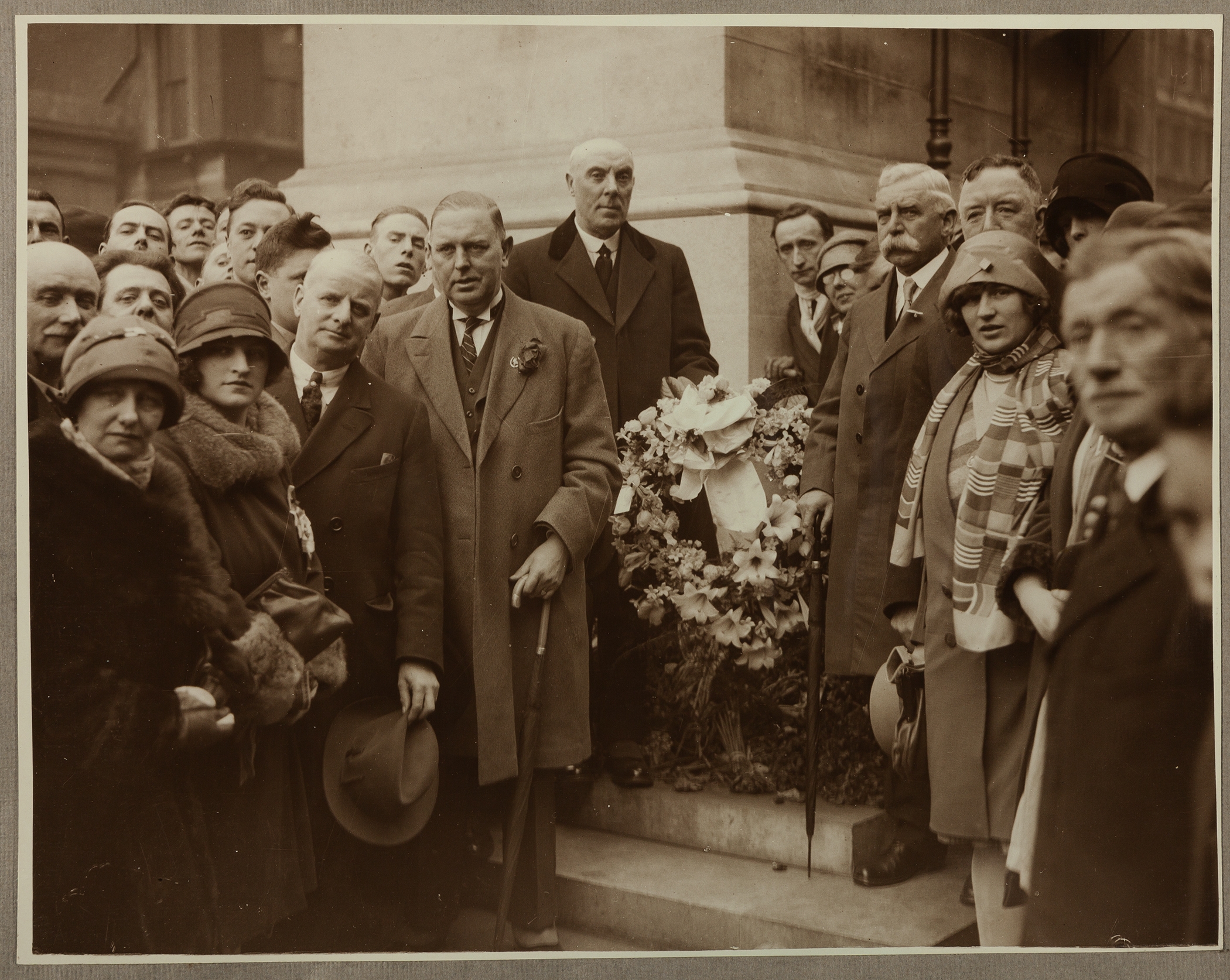
It’s been a mixture of traditional archival visits, digital resources and collecting via ebay. As a museum curator, I’ve exploited my knowledge and access to the NFM’s collections. Having institutional access has been important, as it has allowed me to rethink and revisit different sources as my knowledge has grown. This is especially true of pre- and post-war items that take on new significance. One of my favourite items is a photo album of the 1928 FA Cup final, kept by the Robert Crompton, the team manager and club director of the Blackburn Rovers (and former player and international himself). One of the photos shows the directors and their families placing a wreath at the Cenotaph, which had become a ritual for fans attending on cup final day. Many of them would no doubt have been thinking of Crompton’s teammate Eddie Latheron, who was killed at Passchendaele in October 1917.

Outside of our collections, I’ve used several local libraries and archives, as well as the British Library. Very few sports specials are digitised, so I’ve made use of their excellent Newsroom to consult the originals, doing my best not to erode them too much! While digitisation is revolutionising how we research, seeing these in the flesh did help bring out some of the key changes, as you literally see the newspapers shrink and change colour as rationing took hold. Newspapers encouraged readers to send them to troops at the front, so it’s fascinating to imagine these being handled in the trenches, especially when you consider how big they were before rationing took place.   

What kind of wartime experiences can ephemera help us connect to?  

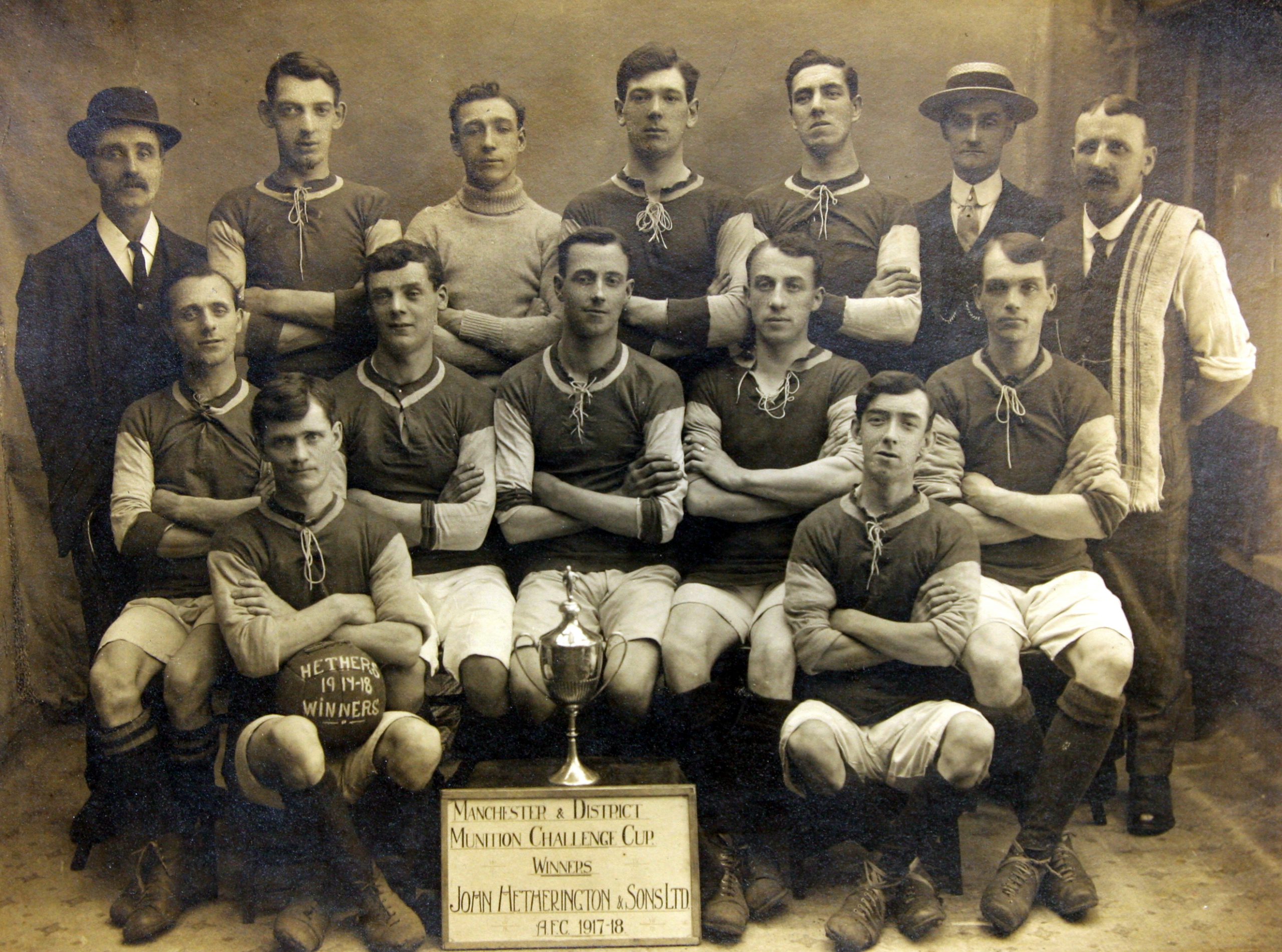
I think the ephemera I consulted is one way into considering some still underexplored experiences, especially for working-class people. One of my most prized ebay acquisitions may seem exceedingly mundane. It’s a team photo of John Hetherington & Sons Ltd, winners of the Manchester & District Munition Challenge Winners Cup. While the rise of women’s football teams during the war is important, this image reminds us that football remained an important outlet for male munition workers too. The fact that they have a trophy is important, as these were banned by the FA between 1915 and 1917, as being incompatible with wartime morals. Or at least that’s what the FA thought. Many working-class teams ignored them and continued to play for trophies and medals before the FA changed their minds. This grassroots experience is barely mentioned in most histories of the Home Front. But the game was clearly important to the men of Hetherington & Sons Ltd to have this photograph taken in keeping with pre-war traditions.

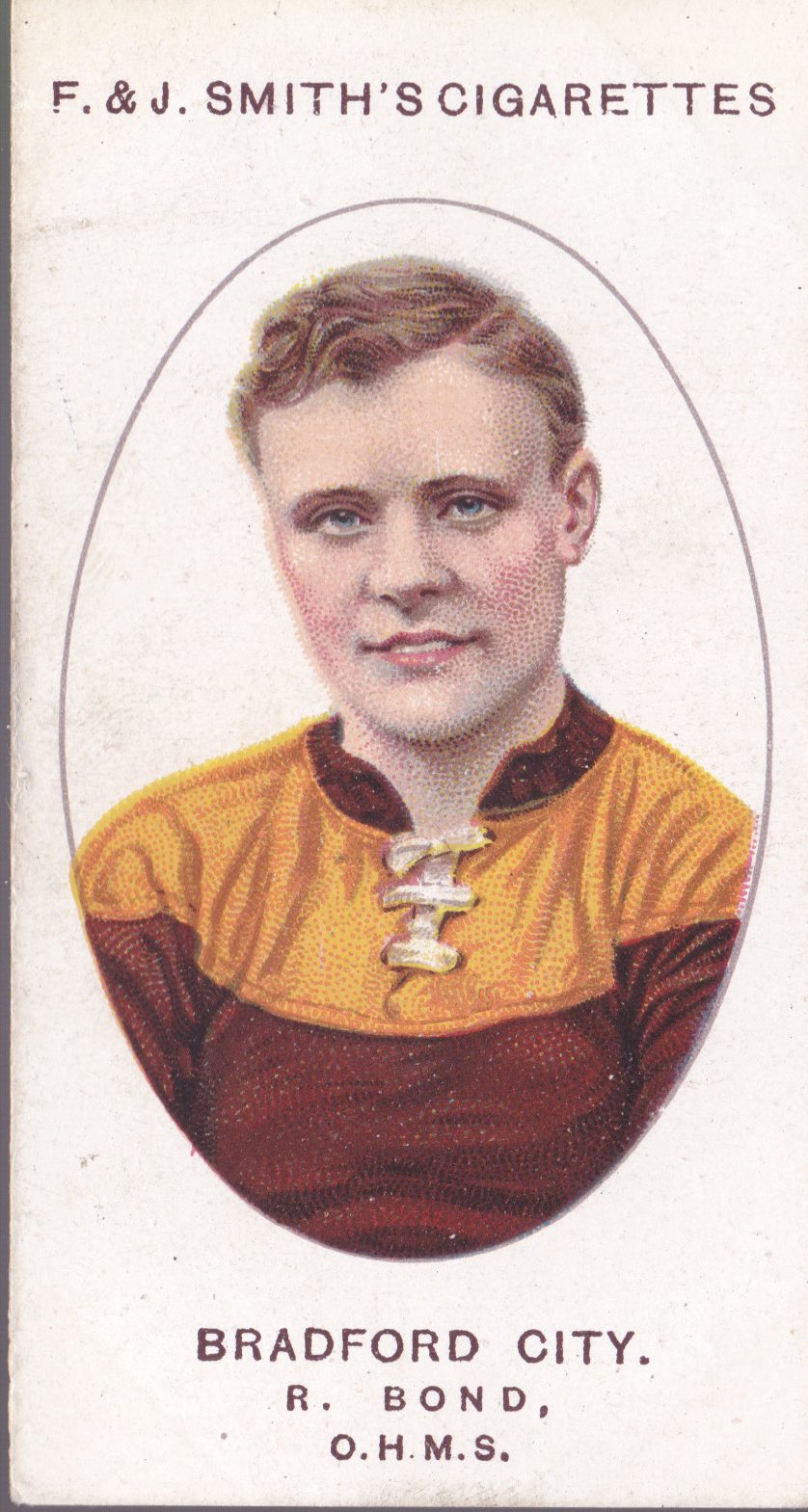
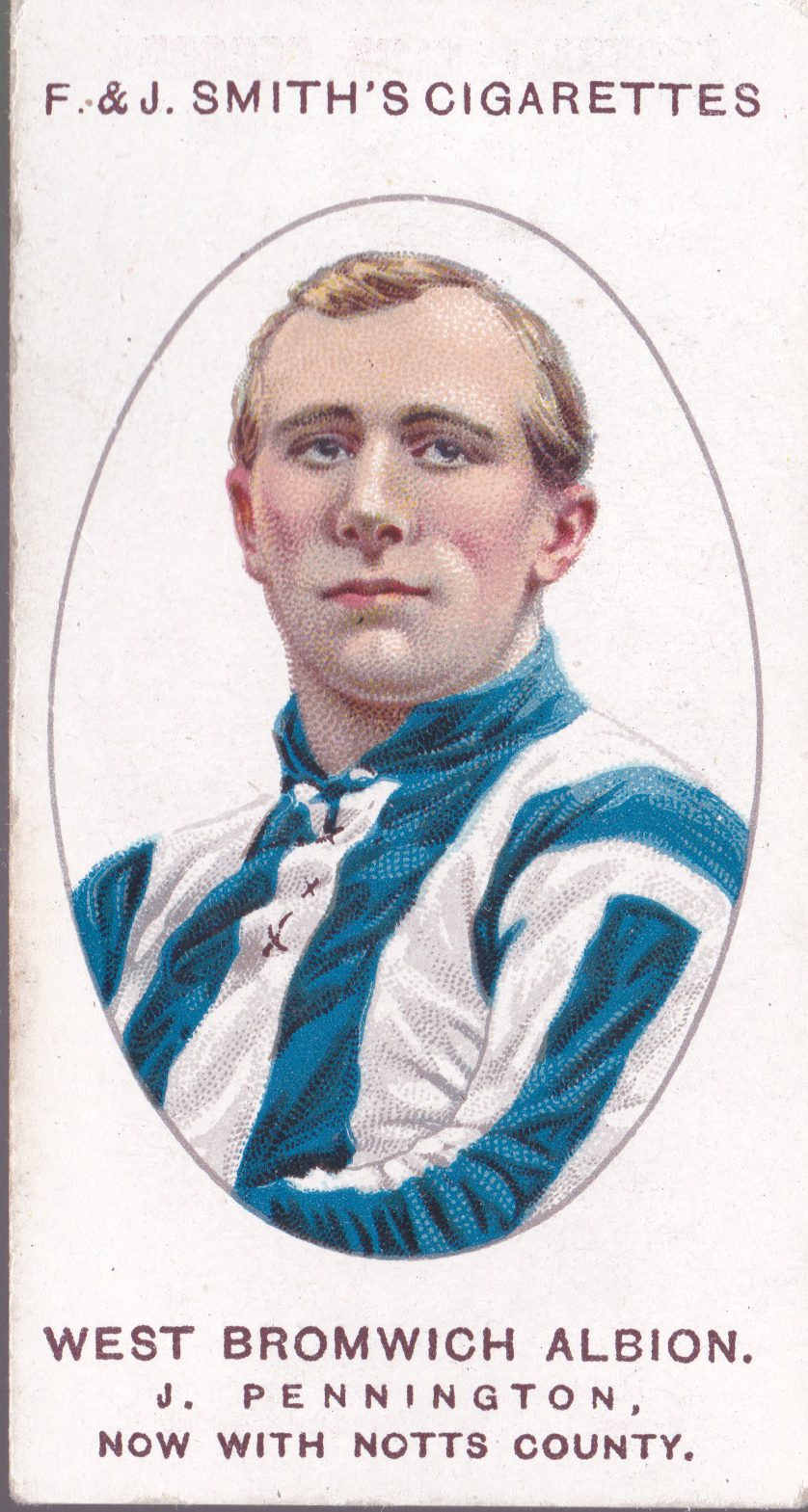
Ephemera can also be the starting point for considering individual lives and experiences. One way into this is a set of cigarette cards that I’ve become fond of collecting. In 1917, F & J. Smith’s produced a set of 50 footballers, depicting leading players from both Scottish and English clubs. It’s a colour set, which gives them a particular charm. What also marks them out as a wartime set is a series of small additional details below the name of the player and his club. For several, like Richard ‘Dicky’ Bond of Bradford City, O.H.M.S. is included, translating as On His Majesty’s Service.’ In Bond’s case, by 1917 he was residing in Germany at the Kaiser’s pleasure as a Prisoner of War, having been captured during a trench raid in 1916. Another reflection of wartime changes can be seen on the card for Jesse Pennington of West Bromwich Albion. In the summer of 1915, West Brom decided to abstain from the temporary regional leagues that were being formed. Left without a club, players like Pennington instead found new clubs to play for. While he played for several different ones, by 1917 he was playing regularly for Notts County.

Finally, I think they can offer an insight into how the football community, or football communities experienced the war. By way of example, we can look at some of the Manchester City programmes we have in the collection. In some ways, its unchanged in terms of its content. There are match reports and gossip about the game and the clubs’ players and items from fans. But by 1918, that meant reporting on players or fans in the forces at home and abroad, like the fan who wrote “to let you know that Manchester City have supporters as far away as Palestine…so good luck to the Blue and White.” The club made sure each player was sent a copy, to help them stay in touch with the club and each other.  In turn, they wrote back with news about themselves. Some of these were updates about where they were or games they had played behind the lines. Others were more serious – news of wounds and the hospitals they were recovering in. Perhaps the saddest letter it published was that written by full-back Peter Gartland and seen by fans in the first home-programme after the Armistice had been signed in 1918.

I am pulling myself together now. I was very unlucky to lose my leg, as my wound was just the size of a three-penny piece, and I sat down and bandaged myself up and was within hospital within two hours of being hit. I was not in hospital two minutes before they had my leg off, as it happened to be a gas-shell and the gas was working right up my leg. But I am doing fine now, and am sorry to say that I have finished with the game my heart and soul were in. (Manchester City programme, 16 November, 1918)

What role did ephemera play in exploring the history of wartime women’s football?

Ephemera is hugely important, as women’s wartime football left very little behind in the way of traditional archives or records. In recent years several historians, including myself, have been trying to piece together the statistical framework by searching through newspapers for dates and details of game. Statistical work is sometimes looked down upon, but it’s important, especially when we consider how much we take it for granted in histories of the men’s game. While newspapers are important, other sources, like Factory Magazines, team photos or postcards are sometimes the only evidence we have of games or teams.

These visual sources are also important for two other reasons. Firstly, they help us see these women as real people. Secondly, we can explore how images in media publications were presented, interpreted, and debated. I’ve written elsewhere and in the book about the Portsmouth Ladies, who were one of the earliest and most prominent teams, thanks to photos by a local photographer appearing regularly in the Daily Mirror. Many of their games were against male opponents, which tended to reinforce gender roles, contrary to what we sometimes think about wartime women’s football. Each image we find and examine is a little piece of a large mosaic we are still uncovering.

Leave a Comment

Your email address will not be published. Required fields are marked *

Scroll to Top