
Who are you and what do you do?
Hi, I’m Tony and I’m Associate Professor of Creative Writing at Northumbria.
Where do you live?
I live in rural Northumberland with my family and two dogs, a decrepit three-legged collie and a noisy, anxious cocker cross.
Which interests, personal or professional, link you to this project?
I write poetry and prose fiction, and the research interests most relevant to the Ephemera project are around the fantastical and the fragmentary. I sometimes write written flash fiction, which is to say very short stories, and I’m interested in the way these can give readers a glimpse of someone’s life without necessarily extending the narrative beyond that glimpse. That’s a very useful idea in thinking about a conflict which impacted on such huge numbers of lives in such varied and different ways. It also fits with the way that trauma can resist being absorbed into the narratives of our lives. I’m also interested in the fantastical, in both medieval and contemporary literatures, and how it can act as a way of acknowledging the strangeness of experience and, again, of traumas which don’t fit into our habitual understandings of our experiences.
What kinds of ephemera would we find preserved in your home?
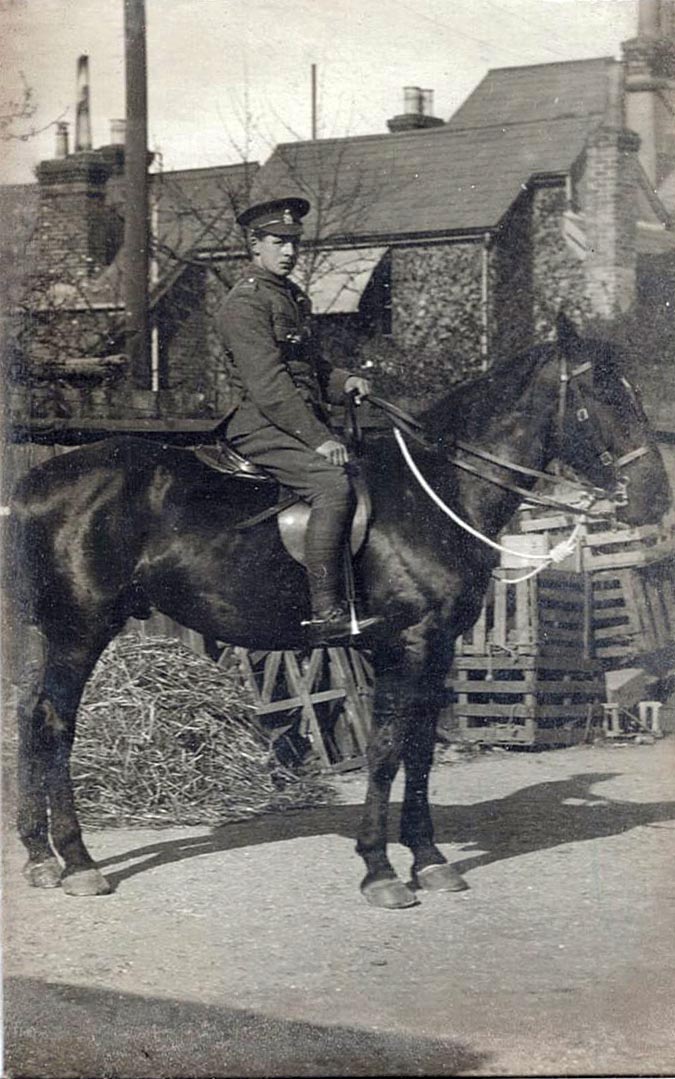
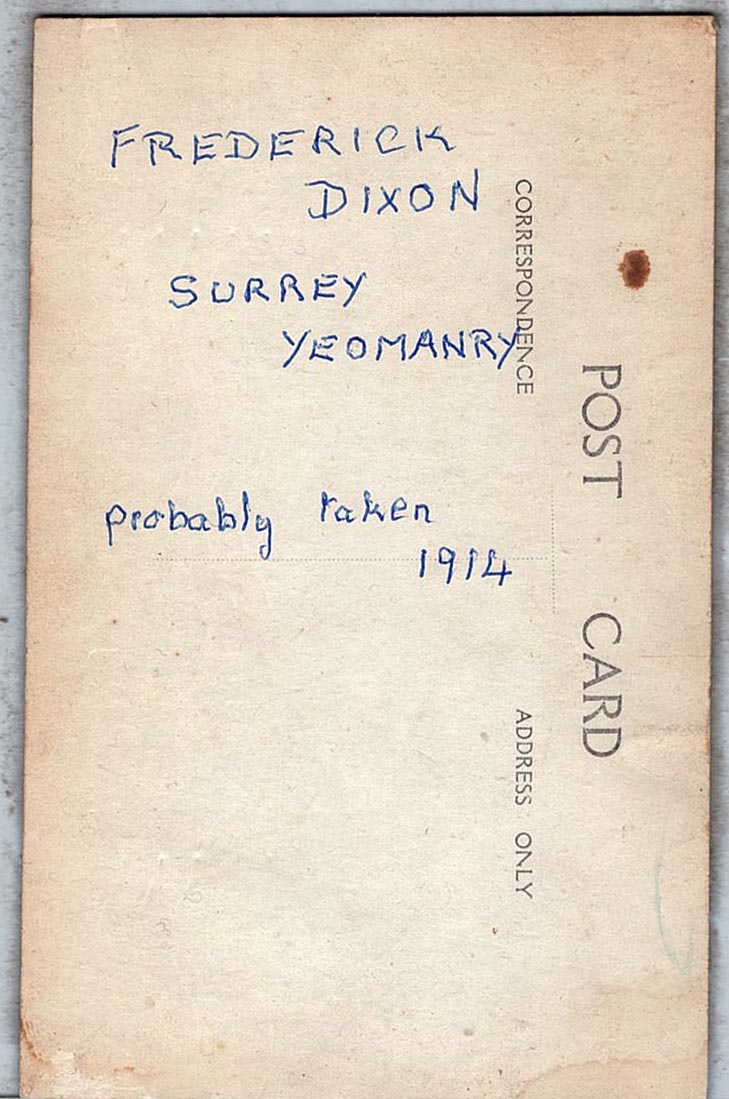
At home we have some ephemera which we inherited from my wife’s gran, who died in early 2020 at the age of 100. There are newspapers, old essays from her student days (she studied under the poet John Heath-Stubbs), and some photographs and postcards relating to her uncle Fred, who fought in the War (including a photograph of him in uniform on a horse, presumably before going out to the Front). Plus a few family photos, letters, and so on – of course the ones from before my time are more interesting, precisely because I don’t know much about them. They’re tantalising – ephemera are fascinating as much for what they don’t tell us as what they do; they stand in for the silence, the lost stories, and maybe that’s what makes them such a powerful literary device.
Do you have a favourite kind of historical ephemera?
Photographs especially: I’ve found myself thinking not only about the before and after of photos and about what lies out of shot, but also about the technologies used to record and reproduce images, from daguerreotypes and other early forms of photography to x-rays, and other forms of image capture beyond the real. What is it that’s captured, exactly, and carried down to us across the decades? And what, if anything, is taken from the subjects, with or without their consent?